

June 2026 Newsletter
News from TU Dortmund University
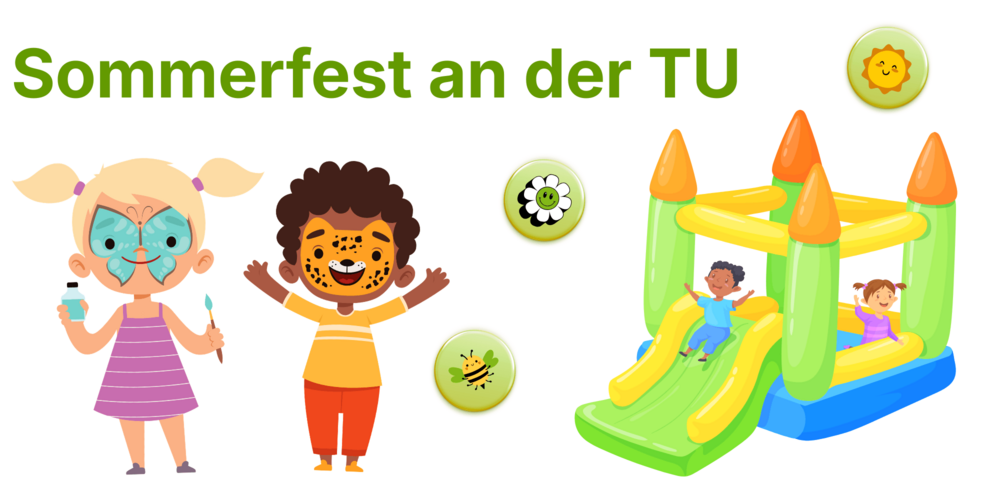
At this year’s TU Dortmund University Summer Festival on July 9, 2026, families can look forward to a colorful program for all ages. In addition to music, international cuisine, and many activities, Campus North will also feature exciting offerings specifically for children:
At the family booth between EF50 and food department, the Family Service and the Dortmund Mothers’ Center invite children to enjoy face painting and creative button-making .
A bounce house on the large lawn and a roller slide from HoKiDo will also provide plenty of exercise and fun. Both can be found between EF50 and the S-Bahn station.
You’re also welcome to stop by the Family Booth to learn more about topics such as work-life balance and childcare options at TU Dortmund. We look forward to seeing you there!

Interview with the TU Large Day Care Centers


Available Childcare Spots for children under three on the South Campus
There are still spots available at our large daycare centers on the South Campus for children aged 2 months to 3 years! A total of 18 care spots are available at the two lovingly furnished large daycare centers. The two groups—the Schlauschlümpfe and the 9 x kluge Zwerge—are cared for by four qualified childminders and share a green outdoor area with a large sandbox, playground equipment, and a view of the H-Bahn. Starting in August, two new daycare providers will join the “Schlauchschlümpfe”. In the “Short Interviews” section, the daycare providers from both groups offer a personal insight into their work and share what matters most to them when caring for the children.
If you have any questions, we at the Family-Service are happy to help. You can submit a non-binding application using our application form. After submitting your application, you can schedule a meeting with the child care providers and a tour of the facility.
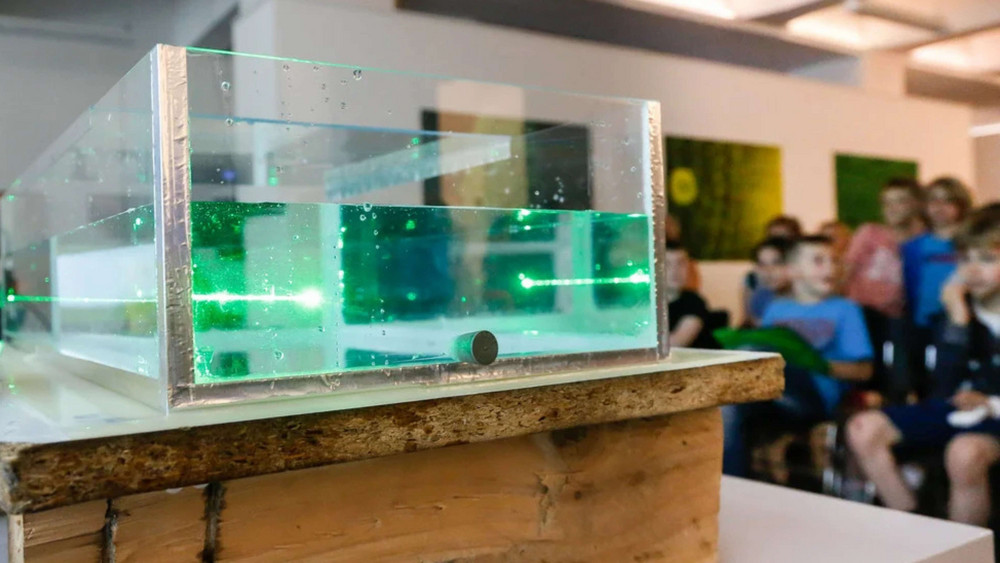
Exciting science, surprising experiments, and plenty of hands-on activities: TU Dortmund University’s Children’s University has kicked off the 2026 summer semester with a diverse program.
In the various events, children ages eight to twelve have the opportunity to get a taste of real university life and gain fascinating insights into research and science. In events designed specifically for children, professors explore exciting questions and topics in depth. Some of the events take place outside the lecture hall, for example at the Dortmunder U or in Wilopark. Participation is free.
Those who participate regularly can collect stamps in their own student handbook and even receive a Children’s University certificate at the end of the semester.
TU Dortmund University invites all interested high school students in 10th grade and above to participate in the SchnupperUni. The SchnupperUni offers the opportunity to gain hands-on experience with various degree programs and campus life. From August 3 to 6, 2026 , high school students can attend lectures, participate in workshops, experience live experiments, and talk with current students and faculty. Participation is free and offers an ideal opportunity to gain initial insights into university studies and various career fields.

As part of the Workplace Health Management campaign week “Strong Together: Mental Health at Work,” a keynote presentation on the topic of mental load will take place on July 1, 2026, from 12:30 p.m. to 2:00 p.m. Mental load describes the invisible, constant mental work involved in caregiving that people do to organize their daily lives: remembering appointments, coordinating tasks, managing the household, and keeping track of everything—for everyone. In the presentation by speaker Laura Fröhlich, participants will learn how mental load arises, why care work often remains invisible, and how tasks within the family, in relationships, and at work can be distributed more fairly. In addition to insights into societal role models and structural changes, the event offers space for exchange, discussion, and questions. All TU Dortmund University employees are welcome to register. Participation is free of charge.
News from Dortmund and the Surrounding Area

Every third Friday of the month, the Dortmund Library hosts a parent-child game afternoon for children ages 6 to 10 and their adult companion(s). Together, they can try out board games and discover both classics and new releases. In a relaxed atmosphere, families can find new favorite games and get to know other families. Participation is free.
Register by phone at: 0231 50-23242
The Mütterzentrum Dortmund is once again offering a diverse weekly program for parents and families this quarter. Activities include postpartum exercise classes, yoga, toddler playgroups, baby massage, and early music education. Parents can also connect with one another through various group activities, such as the fathers’ group, the mothers’ network, the playgroup for rainbow families, the group for parents of twins, or the group for parents of premature babies. A group for mothers and fathers dealing with mental health challenges is also currently being established.

Community, sharing, and mutual support—all of this finds a place in the new self-help group for single parents at the Dortmund Self-Help Contact Center.
In the daily grind of responsibilities, organization, and caregiving, single parents often have little time for meaningful conversation with peers. This is exactly where our support group comes in, offering a monthly opportunity to talk with one another, share experiences, and support each other. In a relaxed atmosphere, these encounters can provide strength, offer relief, and open up new perspectives.
Meetings are usually held once a month at the ZEBRA Community Center of the SOS Children’s Village in the eastern part of downtown. In addition—weather permitting—we also plan group activities such as walks in the woods or gatherings at the playground, where the focus is on both conversation and shared experiences.
The group sees itself as an open space for all single parents. Different lifestyles, backgrounds, and perspectives enrich our community and are expressly welcome.
Anyone interested is warmly invited to get in touch to become part of this supportive community. We look forward to seeing you!

The Dorstfeld Family Office offers local counseling, support, and open programs for families. Its goal is to support families in their daily lives while also creating a place for people to meet and connect within the neighborhood. Services include counseling on childcare, early childhood development, and recreational activities, as well as assistance with questions about daily family life or using the Kitaportal. In addition, regular group activities and social gatherings are held. Since this spring, the “Narwali” swimming container has also been available, offering water familiarization sessions for children . These services are aimed at families with children aged 0 to 10.
The Family Office serves as an open meeting and networking space, and parents are warmly invited to chat with one another over coffee or tea and to discuss topics and questions with the staff in a confidential setting.
Address: Oberbank 11, 44149 Dortmund
Hours: The Family Office is open Monday through Friday from 8 a.m. to 12 p.m., and additionally on Tuesdays and Thursdays from 1 p.m. to 4 p.m. Consultation hours at the Family Office or with the daycare social work team are Mondays and Thursdays from 8:30 a.m. to 10:30 a.m.

Sunday afternoons at the Regenbogenhaus turn into little theatrical adventures for the whole family. At the Kinderkulturcafé in Westfalenpark, children can enjoy a varied program featuring theater, magic, clown shows, and interactive activities. Every Sunday at 3:30 p.m. , the Regenbogenhaus transforms into a colorful gathering place. The Kinderkulturcafé is part of the diverse offerings at the Regenbogenhaus, which is known as an open and creative space for children and families. In addition to cultural events, craft activities, vacation programs, and the wood and clay workshop invite everyone to explore and experiment together.

A summer vacation program for children ages 8 to 14 will take place at the Dietrich-Keuning-Haus in Dortmund from July 20 to 24, 2026 . Participants will sing, make music, and dance together. The program will conclude with a performance. No prior experience is necessary; the focus is on creativity, the joy of trying new things, and the shared experience. The children will be provided with a hot, vegetarian lunch. Participation is free of charge.
The family concert “Britten’s Young Person’s Guide to the Orchestra” at Friedensplatz invites children and adults on July 12, 2026 , to a playful journey of discovery through the world of musical instruments. The concert explains in a vivid and entertaining way how an orchestra is structured and what sounds the individual instruments produce. There will be a hands-on program for families even before the concert begins. The concert itself starts at 11:00 a.m.

The balou e.V. Youth Art School invites you to its big summer festival on July 12, 2026, featuring a diverse family program. Starting at 11 a.m., visitors can look forward to a varied day of stage performances, creative hands-on activities, and a children’s flea market run by kids for kids.
On stage, children and teens will showcase their artistic talents through ballet, acrobatics, dance, and street dance, among other performances. The program will be complemented by creative workshops and numerous activities designed to entertain both young and old. In addition, the balou team will be at the information booth to provide details about current courses and programs offered by the cultural center. Refreshments will also be available: Café balou will serve coffee, cold drinks, grilled sausages, ice cream, and fresh waffles.
Interesting projects, offers, and surveys

How can you balance a career, a Ph.D., and family life? In the latest episode of the podcast *Kurz mal was Anderes machen*, Liliann Fischer talks about her personal journey juggling academic work, her Ph.D., and motherhood. The discussion covers practical aspects of everyday family life as well as role models, time management, and work-life balance.
A recent study provides the first comprehensive examination of the distribution of so-called “mental work” within families in Germany. “Mental work” refers to the often invisible organizational and planning tasks of everyday life (e.g., coordinating doctor’s appointments, remembering birthdays, or organizing childcare). More than 2,600 people in Germany were surveyed for the study. The results show that mothers continue to shoulder the majority of “mental work.” Fathers are significantly more likely to perceive the division of tasks as equitable, while women predominantly view themselves as responsible for planning and organizing family life. Couples with more egalitarian role models perceive their mental work as being distributed more fairly.
The qualitative study “Between ‘Motherly Duties’ and ‘Just Being a Son’” sheds light on the realities of life for young family caregivers in Germany.
The study shows that family caregivers often experience significant role conflicts. Many of those affected feel torn between the expectations placed on them as a child, student, or friend and their responsibilities as a caregiver. In some families, there is a reversal of traditional parent-child roles, with young people taking on parental tasks and responsibilities at an early age. According to the study, the gender of the caregiver does not play a decisive role in this context. The burdens affect young caregivers of all genders equally. The researchers point out that issues of role identification have so far rarely been specifically addressed in counseling and support services. They therefore recommend providing greater support to young family caregivers to help them come to terms with their own role and take advantage of appropriate support services.
About the study “Between ‘Motherly Duties’ and ‘Just Being a Son’”
Good to know
Are you a family caregiver or a parent? If so, you may be eligible for a health retreat. Parents and family caregivers provide a great deal of care every day and often push themselves to their limits. A health retreat can offer a break from daily life and a space to connect with others in similar situations. A health retreat typically lasts 3 weeks. During the retreat, participants receive medical treatments, engage in sports and exercise, and take part in psychological counseling and stress-management sessions. Meals and housekeeping are fully provided, allowing you to take a break from your daily responsibilities. For mother-father-child health retreats, childcare is also available during the day. In the afternoons or on weekends, you can participate in shared activities designed to strengthen the parent-child bond away from the stresses of daily life. Family caregivers can either attend the retreat alone while care at home is arranged (e.g., through respite care or short-term care), or they can travel together with the person in need of care, who will then be cared for on-site. The program concludes after 21 days with a final consultation and concrete strategies for moving forward, so that the newfound strength and serenity can be maintained for as long as possible in everyday life.
Who is eligible?
Family caregivers: Individuals who care for a family member (at least care level 1) in a home setting and feel that the constant strain of this work is jeopardizing their own health (e.g., through sleep disturbances, back pain, or exhaustion).
Mothers and fathers: Individuals who are actively responsible for raising children and whose health is at risk or under strain due to the multiple demands specific to parenthood (work, household duties, child-rearing, or special life circumstances such as single parenthood).
How does the application process work?
First, discuss your health concerns and the need for a health retreat with your primary care physician and have the necessary medical certificates issued. Next, it’s best to seek free assistance from a health retreat counseling center. Finally, submit all documents to your health insurance provider, which will then decide whether to approve your application.
The Caritas Association in Dortmund offers health retreat counseling for parents and family caregivers. The staff also guide you through the entire application process and are available to answer any questions. They help you find a suitable health retreat facility and assist with filling out the health insurance company’s application forms. If the application is denied, they can also assist you in filing an appeal. You can also apply for a health retreat on your own. However, since each application involves individual conditions and different requirements, it is recommended that you work with an advisory center.
Did you know that TU Dortmund University has formulated guiding principles for family-friendly policies? These are intended to create a framework for family-friendly practices at the university:
- TU Dortmund University believes that a family-oriented approach is a key indicator of the quality of the university’s operations in research, teaching, and administration.
- Family-friendly measures are intended to support students and employees at TU Dortmund University in balancing their responsibilities toward children and family members with their studies and careers.
- TU Dortmund University is committed to doing everything in its power to help students with children and family obligations achieve their academic goals while taking their family circumstances into account. It also encourages students to address issues related to balancing family and career planning throughout their entire time at the university.
- Within the context of research operations—particularly with regard to early-career researchers—workflows and structures are designed to facilitate an easy and flexible balance between work and family life. Above all, the focus is on increasing the predictability of academic careers to make it easier to start a family.
- Overall, TU Dortmund University is guided by the conviction that university operations in research, teaching, and administration should be structured so that family-oriented considerations are taken into account as an essential framework condition in all planning, implementation, and monitoring processes. The goal is to raise awareness of family-oriented considerations, to integrate them into decision-making, and to promote them.
Short Interviews
Fun Facts

Did you know that in a child’s brain, up to 1,000 new connections are formed every second during the first few years of life? Play is an important tool in this process—not just a random pastime. Through movement, imitation, imagination, and social interactions, children learn how the world works.
According to UNICEF, free play not only fosters creativity and language development but also social and emotional skills. “Pretend play,” in particular, helps children later on to solve problems and see things from new perspectives. Valuable play doesn’t require elaborate or special toys. Time, attention, and room for imagination are all it takes to foster lasting learning.
Contact, Counseling Options & Feedback
Our Family Services offers a wide range of counseling options to help you balance family responsibilities with your studies, training, academic pursuits, and career. We support students and employees in finding personalized solutions for their unique life situations.
Possible topics include:
- I’m pregnant while I’m in school—what should I do?
- Maternity leave for students
- Studying with a child or children
- Balancing work and family
- Parental leave and parental benefits for employees
- Childcare near campus
- On Campus with a Child or Children
- Caring for Family Members (due to age, illness, or disability)
To schedule an appointment, please contact us at familien-service@tu-dortmund.de or by phone. We look forward to hearing from you!

Click here to access our LimeSurvey, where you can share constructive criticism, praise, and topic suggestions.
We look forward to your feedback so we can tailor the newsletter even better to your needs!
